
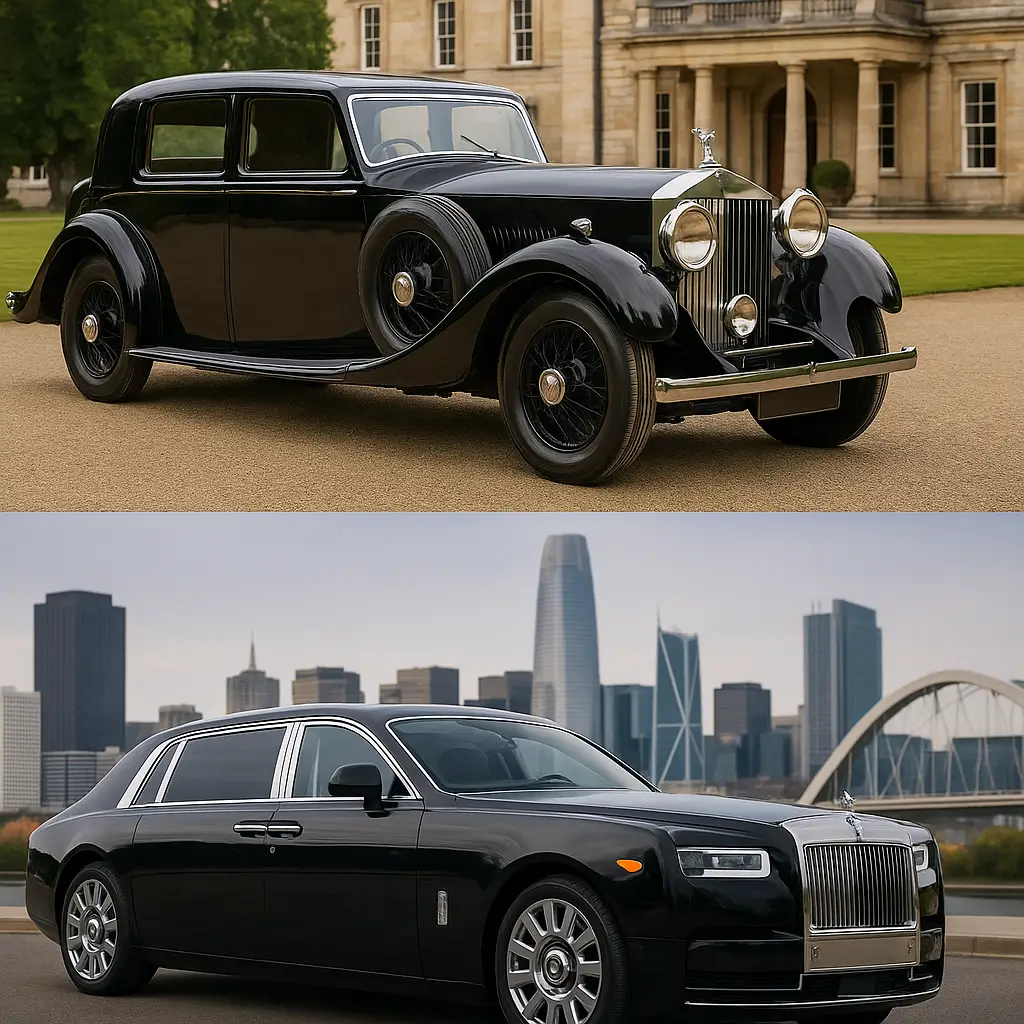
Few automobiles in history command as much respect and admiration as the Rolls-Royce Phantom Limousine. Since its introduction in 1925, it has remained the embodiment of prestige, craftsmanship, and British luxury. The Rolls-Royce Phantom Limousine History is not just a timeline of cars — it’s a living narrative of innovation, elegance, and the pursuit of perfection.
The Beginning – The Birth of the Phantom (1925–1939)
The journey began in 1925 with the launch of the Phantom I, the successor to the Silver Ghost. This model marked a new era for Rolls-Royce, introducing a 7.7-liter engine that offered quiet yet commanding performance. The car became an instant favorite among aristocrats, royals, and industrial magnates who desired not just transport but status.
The Phantom II (1929–1936) refined that excellence with an improved chassis and suspension system. It allowed better handling and stability — a sign that Rolls-Royce luxury car heritage was becoming as much about performance as it was about prestige. These early Phantoms were custom-bodied by renowned coachbuilders, ensuring each one was unique.
By the late 1930s, the Phantom III emerged with revolutionary engineering — a V12 engine and an aluminum-alloy body. It was Rolls-Royce’s most advanced creation before World War II, setting new standards in iconic British luxury cars.
Post-War Luxury – Phantom III to V (1939–1968)
After the war, Rolls-Royce turned its focus toward redefining post-war luxury. The Phantom IV (1950–1956) became legendary for one reason — it was reserved exclusively for royalty and heads of state. Only 18 units were ever produced, each meticulously hand-built.
The Phantom V (1959–1968) then took the brand global. Driven by figures like Queen Elizabeth II and John F. Kennedy, it became the Rolls-Royce classic limousine model that symbolized diplomacy and power. Featuring an extended wheelbase and unmatched rear-cabin comfort, it was the preferred choice for global dignitaries — explore how it became the choice for global dignitaries.
The Modern Renaissance – Phantom VI to VII (1968–2003)
As design trends evolved, so did the Phantom. The Phantom VI (1968–1990) continued the brand’s coach-built tradition, blending classical design with subtle modernization. It remained the official state car for the British monarchy for decades.
In 1998, BMW acquired Rolls-Royce, leading to one of the most pivotal moments in Rolls-Royce Phantom generations. The result was the Phantom VII (2003) — the car that revived Rolls-Royce’s status as a leader in ultra-luxury automotive design. This model featured a 6.75-liter V12 engine, a hand-crafted interior, and a distinctive rear “suicide door” design that symbolized grace and confidence.
Automotive historians often discover how the Phantom changed the course of luxury cars when studying this transitional era — the perfect harmony of British tradition and German precision.
The Ultimate Symbol of Luxury – Phantom VIII (2017–Present)
When the Phantom VIII debuted in 2017, it reaffirmed Rolls-Royce’s supremacy in the world of luxury limousine evolution. Built on a brand-new aluminum “Architecture of Luxury,” this model blended heritage craftsmanship with cutting-edge technology.
Features like adaptive air suspension, starlight headliner, and a near-silent cabin redefined modern opulence. The bespoke “Gallery” dashboard even allows owners to customize artwork within the car — a concept unheard of in automotive history.
The Phantom VIII isn’t just a car; it’s an experience. It embodies the brand’s spirit — innovation without compromise, beauty with purpose, and comfort beyond imagination.
The Rolls-Royce Phantom Limousine Legacy
Each generation in the Rolls-Royce Phantom Limousine History tells a story of progress. From the royal courts of the 1930s to the elite driveways of today, the Phantom has remained the ultimate symbol of distinction.
It is more than a means of travel — it’s a living legacy of craftsmanship. Its evolution mirrors societal shifts, design trends, and technological milestones. The Phantom I to Phantom VIII timeline is a narrative of continuous refinement.
Why the Phantom Remains Timeless
What makes the Phantom timeless is not just its engineering, but its soul. Collectors treasure it for its heritage; royals favor it for its elegance; and enthusiasts admire it for its Rolls-Royce design evolution.
As luxury brands chase modern trends, Rolls-Royce remains steadfast in its belief — true luxury is effortless, enduring, and exclusive. That’s why every Phantom feels more like an heirloom than a vehicle — a masterpiece meant to be passed through generations.
And if you wish to meet the legendary minds behind this masterpiece, the creators’ story is as fascinating as the limousine itself.
Conclusion
From the grand debut of the Phantom I to the technological marvel of the Phantom VIII, the Rolls-Royce Phantom Limousine History reflects a century-long pursuit of perfection. Each generation built upon the last — preserving elegance while embracing innovation.
Today, the Phantom remains a living symbol of prestige, sophistication, and artistry — a true crown jewel among luxury limousines.
For more on the brand’s craftsmanship and the latest Phantom lineup, visit the official Rolls-Royce Motor Cars website.




