
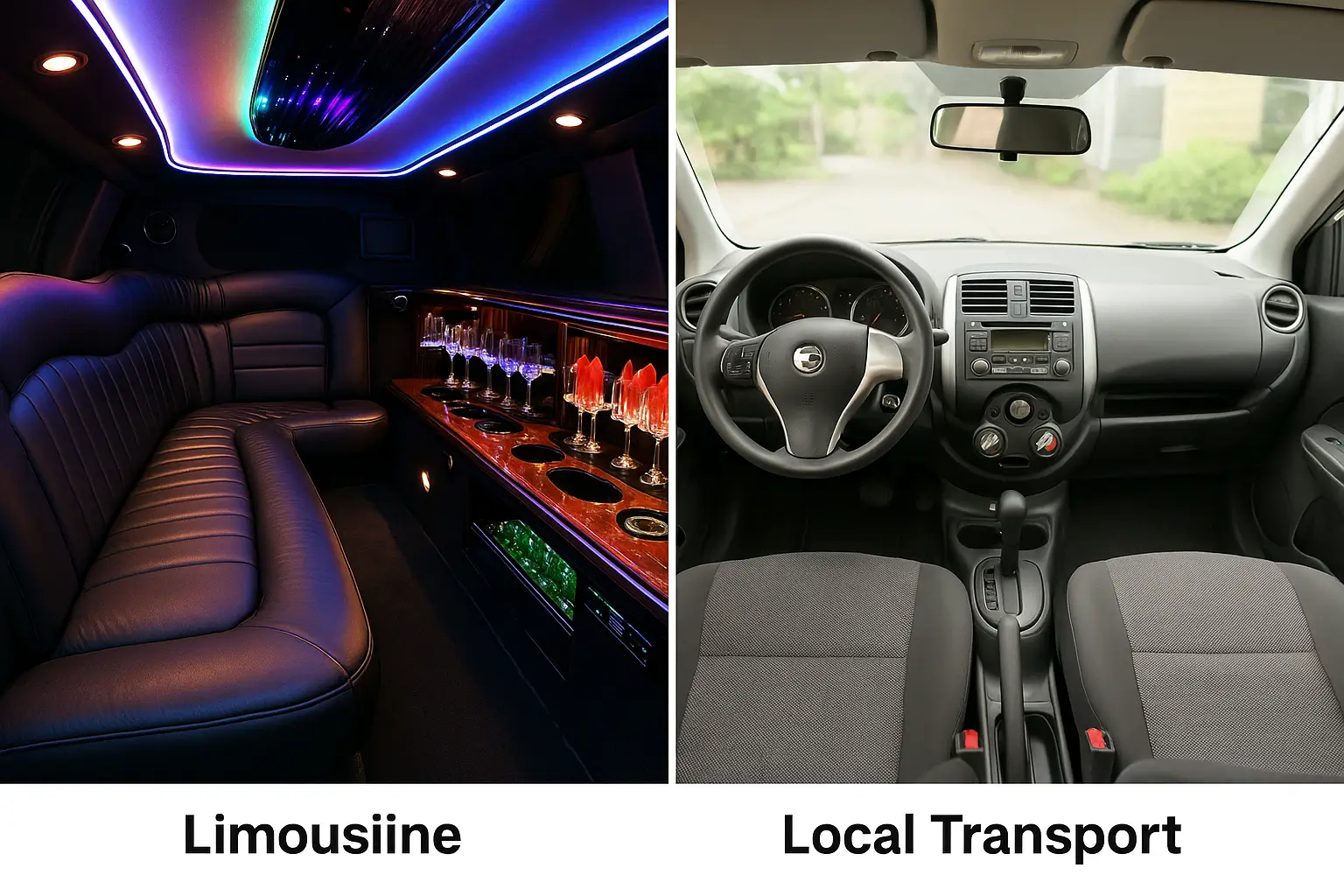
When it comes to travel, comfort and style matter. One of the most noticeable contrasts in the transportation industry lies in the difference between the interior of a limousine and local transport. While both serve the purpose of moving passengers from one place to another, the level of comfort, features, and overall experience is vastly different.
In this article, we’ll explore the major differences that make limousine interiors stand out from standard local transport.
1. Comfort and Seating Arrangement
The first noticeable difference between the interior of a limousine and local transport is the seating.
- Limousine Interiors: Designed with luxury in mind, limousines feature plush leather seating, often arranged in a way that passengers can face each other, encouraging conversation. The seats are spacious, cushioned, and provide ample legroom.
- Local Transport: In contrast, buses, taxis, and other local vehicles usually prioritize practicality. Seats are arranged in rows, tightly packed, and made from fabric or plastic with minimal cushioning. Comfort is not the priority; efficiency is.
2. Privacy and Exclusivity
Another striking difference between the interior of a limousine and local transport is the level of privacy.
- Limousine Interiors: Limousines often come with tinted windows, privacy partitions between the driver and passengers, and a serene atmosphere where travelers can relax without disturbance.
- Local Transport: On buses or shared taxis, privacy is almost non-existent. You travel with strangers, and the noise level is often unpredictable.
3. Entertainment Systems
Entertainment is a luxury many seek during travel, and this is where limousines outshine.
- Limousine Interiors: Equipped with high-end sound systems, LED screens, mood lighting, and sometimes even mini-bars, limousines provide a party-like atmosphere for passengers.
- Local Transport: Most local transport options lack advanced entertainment features. At best, you might find a basic radio or a screen showing general programs, but nothing close to the personalized entertainment experience of a limousine.
4. Amenities and Luxury Features
The difference between the interior of a limousine and local transport becomes even clearer when looking at amenities.
- Limousine Interiors: Many limousines are fitted with climate control systems, Wi-Fi connectivity, luxury flooring, refrigerators, and charging ports. The interiors are designed for convenience, comfort, and elegance.
- Local Transport: Local transport vehicles generally lack such amenities. Their interiors are basic, functional, and built to serve the maximum number of people rather than focus on comfort.
5. Atmosphere and Ambiance
The ambiance inside the vehicle can make or break the journey.
- Limousine Interiors: Offer a calm, elegant, and sophisticated atmosphere, often with dimmable lights, music control, and luxury finishing materials like leather, wood, or suede.
- Local Transport: Feels crowded, noisy, and hectic, especially during peak hours. The ambiance is purely functional with little to no luxury appeal.
Conclusion
The difference between the interior of a limousine and local transport is not just about luxury but about the overall travel experience. A limousine is designed for comfort, privacy, and prestige, making it suitable for special occasions, business trips, or VIP travel. On the other hand, local transport focuses on affordability and efficiency, catering to the masses.
Choosing between the two depends on your needs. If you value comfort and exclusivity, a limousine is the clear winner. If practicality and cost matter more, local transport remains the go-to option.





We are dedicated to providing quality Luxury airport transfers, including comfortable and reliable limousine services. We service all over Dubai city.